

 English
 Spanish
 French
 German
 Italian
 Chinese (Simplified)
 Japanese
 Korean
 Arabic
 Portuguese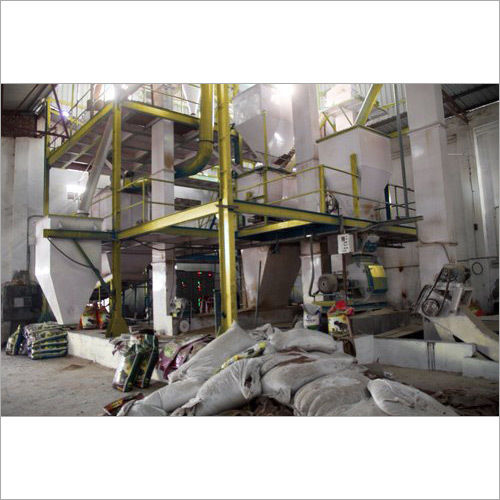
Fully Automatic Cattle Pallet Feed Plant
Product Details:
- Installation Guideline Onsite installation with foundation required
- Accessories Bucket Elevator, Pelletizer, Mixer, Grinder, Conveyor, Cooling System
- Motor Power As per capacity (30-110 HP)
- Usage & Applications Used for producing cattle feed pallets in dairy and livestock industry
- Driven Type Electric
- Temperature Range Ambient to 80°C
- Source CATALOG
- Click to View more
X
Fully Automatic Cattle Pallet Feed Plant Price And Quantity
Fully Automatic Cattle Pallet Feed Plant Product Specifications
- 8500-12000 kg
- Greater than 90%
- Fully Automatic
- Depends on model (typically 50-150 kW)
- 380-440 V
- Green/Grey (Standard)
- Customized as per requirement
- Fully Automatic
- PLC based control system
- CAPF-FA01
- Powder Coated
- Onsite installation with foundation required
- Yes
- Bucket Elevator, Pelletizer, Mixer, Grinder, Conveyor, Cooling System
- 50-150 kW
- 1 - 20 Tons Per Hour
- As per capacity (30-110 HP)
- Used for producing cattle feed pallets in dairy and livestock industry
- Electric
- Mild Steel
- Ambient to 80°C
- Fully Automatic Cattle Pallet Feed Plant
- Cattle Feed Pallet Plant
- 50/60 Hz
- CATALOG
- Electric
- High Output, Robust Construction, Low Maintenance, Energy Efficient
- Up to 20 TPH
- Variable
- Onsite Service and AMC available
- Dry and Mash Feed
- 30-45 kWh
- Integrated Cyclone Separator
- Digital Touchscreen
- Grains, Bran, Oil Cakes, Minerals, Vitamins
- IS:2062 Certified
- Automatic Centralized Lubrication
- Automatic Vibratory Feeder
- 10°C to 40°C
- Fully Enclosed and Automated
- Less than 10 minutes
- 2-12 mm
- Below 80 dB
Product Description
Product details
| Motor Power | 220 hp |
| Material | Mild steel |
| Pet Type | Cattle |
| Automation Grade | Automatic |
| Type | Automatic |
| Voltage | 220/380/400/415V |
| Usage/Application | Cattle Feed Making |
| Capacity | 2000-3000 Kg/ Hr |
Advanced Automation for Consistent Output
This plant operates on a fully automated, computerized PLC-based system, requiring minimal manual intervention. The touchscreen interface allows easy control over all parameters, including feed type and pellet size. The vibratory feeder and enclosed feeding system ensure uniform raw material distribution, contributing to consistent pellet quality and high productivity rates.
Superior Construction and Versatility
Manufactured using IS:2062 certified mild steel with a powder-coated finish, the plant is engineered for durability and extended service life. The equipment efficiently processes a variety of grains, brans, oil cakes, minerals, and vitamins, making it suitable for a wide range of cattle feed formulations. Its robust design handles continuous operation with low maintenance needs.
Enhanced Service and Operational Support
To ensure smooth functioning, the plant includes onsite installation with a robust foundation, and comes with AMC (Annual Maintenance Contract) and responsive onsite service options. The integrated cyclone separator ensures a dust-free workspace, while the automatic lubrication system keeps mechanical parts running seamlessly, further reducing downtime.
FAQ's of Fully Automatic Cattle Pallet Feed Plant:
Q: How does the automatic vibratory feeder work in this cattle pallet feed plant?
A: The automatic vibratory feeder uniformly distributes raw materials, such as grains, bran, and oil cakes, into the processing system. This ensures consistent feed blend and prevents blockages, allowing smooth, continuous pellet production.Q: What types of feed can be processed by this plant?
A: This plant supports both dry and mash cattle feeds, providing flexibility to cater to various dietary requirements in the dairy and livestock industry. Multiple raw materials, including grains, minerals, and vitamins, can be efficiently processed.Q: When is the recommended time for maintenance under the AMC?
A: Under the Annual Maintenance Contract (AMC), scheduled maintenance is typically recommended every 6 to 12 months, depending on plant usage and production levels, to ensure constant efficiency and minimize unplanned downtime.Q: Where is onsite installation and support available for this machine?
A: Onsite installation, foundation setup, and ongoing service support are offered across India by the manufacturer, ensuring that customers receive timely assistance throughout the installation and operational phases.Q: What is the step-by-step process for producing cattle feed pellets in this plant?
A: First, raw materials are conveyed via the bucket elevator and measured by the vibratory feeder. They are then ground and mixed before entering the pelletizer, where they are extruded through dies to create pellets with a 2-12 mm diameter. These pellets are then cooled and collected, ready for packaging or storage.Q: How does the integrated cyclone separator benefit the working environment?
A: The integrated cyclone dust collection system extracts and separates dust produced during feed processing, maintaining cleaner air quality in the workspace and reducing operator exposure to airborne particles.Q: What are the major benefits of using this fully automatic plant in terms of efficiency and energy use?
A: The plant features over 90% operational efficiency and designed energy consumption of 30-45 kWh per ton of feed. Its automated functions, minimal human intervention, and robust construction deliver high output, reduced power costs, and lower maintenance, making it an optimal choice for large-scale cattle feed operations.Tell us about your requirement

Price:
Quantity
Select Unit
- 50
- 100
- 200
- 250
- 500
- 1000+
Additional detail
Mobile number
Email

Other Products in 'Cattle Feed Plants' category




 Send Inquiry
- Mr Gopal Singh Namdhari (Proprietor)
- Mobile : 08045812497

|




 |
NAMDHARI INDUSTRIAL WORKS
All Rights Reserved.(Terms of Use) Developed and Managed by Infocom Network Private Limited. |
